How to Organize a Shared Closet Without Fighting for Space
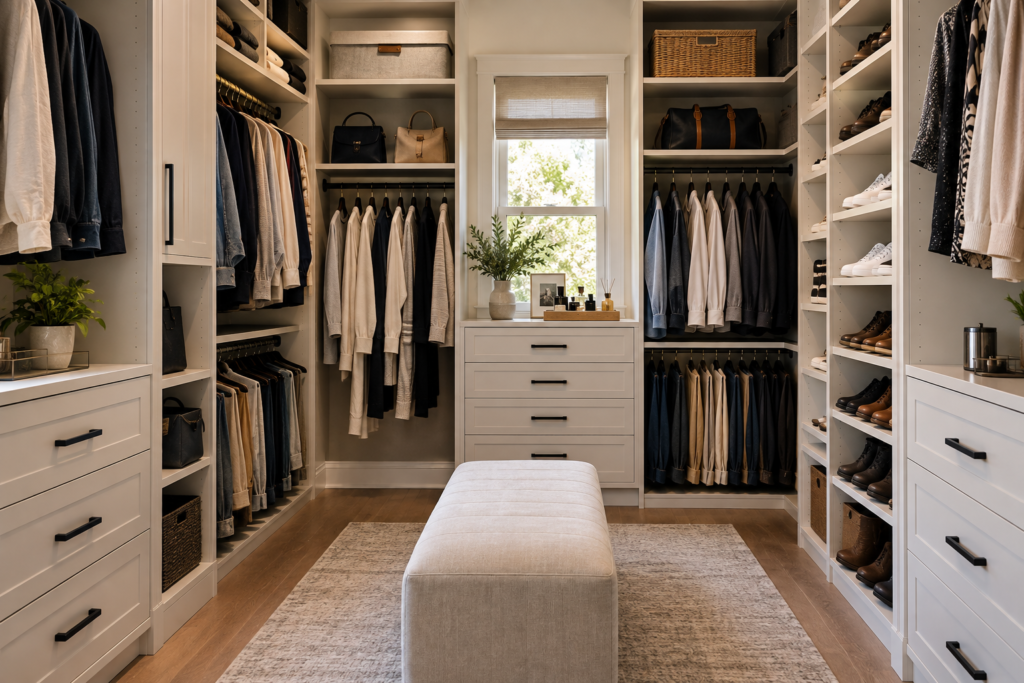
Sharing a closet sounds simple until two wardrobes, two routines, and two completely different ideas of organization have to fit into one space.
One person may own more shoes. The other may need extra hanging space. One prefers everything neatly folded, while the other wants to see everything at a glance. Without a thoughtful layout, even a good-sized closet can quickly feel crowded.
The solution is not necessarily a bigger closet. A well-planned shared closet organization system can make better use of the space you already have while giving each person a storage area that works for them.
Here are practical ways to organize a shared closet and make it easier to keep tidy every day.
Start by Taking Everything Out
Before buying organizers or deciding where things should go, empty the closet.
It may feel like extra work, but it gives you a clear picture of how much clothing, footwear, and accessories actually need to fit inside.
Sort everything into categories such as shirts, pants, dresses, jackets, shoes, bags, jewelry, and seasonal clothing. This is also a good opportunity for both people to decide what they still wear and what is simply taking up valuable space.
Once you know what needs to be stored, you can create a closet layout based on real needs instead of guessing.
Give Each Person Their Own Zone
One of the easiest ways to keep a shared closet organized is to establish clear zones.
Instead of mixing everyone’s clothes across the entire closet, designate sections for each person. It does not necessarily need to be a perfect 50/50 split.
If one person has more long dresses and jackets, they may need additional long-hanging space. Someone with a larger collection of shirts and pants may benefit more from double hanging rods.
The goal is fairness through function, not identical storage.
A custom shared closet can be especially useful because the layout can be designed around both wardrobes rather than forcing both people to use the same configuration.
Double Your Hanging Space Where Possible
If your closet has a single rod with a large amount of empty space underneath, you may be wasting valuable vertical space.
Double hanging sections place one rod above another, creating separate areas for shorter garments such as shirts, blouses, pants, and skirts.
This simple change can dramatically increase hanging capacity without increasing the size of the closet.
Keep a separate full-height hanging section for dresses, coats, suits, or other longer pieces. By combining long hanging and double hanging, you can make much better use of the available wall height.
Use Drawers to Control the Small Stuff
Not everything belongs on a hanger.
Socks, undergarments, workout clothes, pajamas, jewelry, watches, belts, and smaller accessories can easily create clutter when they do not have dedicated storage.
Built-in drawers keep these items contained while giving the closet a cleaner appearance.
Drawer dividers can make them even more useful. Instead of digging through one large drawer, you can create smaller sections for specific items.
In a shared closet, assigning drawers to each person also helps maintain boundaries and prevents belongings from becoming mixed together.
Create a Dedicated Shoe Area
Shoes have a way of taking over closet floors.
When pairs are lined up wherever there is available space, they can quickly make even an organized closet look messy.
Dedicated shoe shelving solves this problem while making footwear easier to see and access. Adjustable shelves are particularly helpful because boots, sneakers, heels, and flats all require different amounts of space.
If one person has significantly more shoes, design the storage accordingly. There is no reason both sides need identical shoe shelves if their collections are completely different.
Again, the best shared closet organization is based on what you actually own.
Don’t Forget the Upper Shelves
The highest areas of a closet are valuable, but they should not be used for things you need every morning.
Use upper shelving for items such as luggage, storage boxes, extra bedding, handbags, and seasonal clothing.
At the end of the season, winter accessories can move up while summer items become more accessible, and vice versa.
Matching baskets or storage boxes can also keep smaller items contained and make open shelving look less cluttered.
The key is keeping everyday belongings within comfortable reach and reserving higher storage for occasional-use items.
Add Storage for Accessories
A shared closet becomes much easier to manage when accessories have dedicated places too.
Consider pull-out valet rods, jewelry drawers, belt racks, tie racks, handbag shelves, or hooks depending on what you own.
These features may seem small, but they prevent accessories from ending up on shelves, counters, or the floor.
A valet rod, for example, gives you a convenient place to prepare tomorrow’s outfit. A jewelry drawer keeps smaller pieces organized and protected without requiring another storage box on top of a dresser.
Choose accessories because they solve a problem in your routine, not simply because they look impressive.
Keep Frequently Used Items Easy to Reach
Good closet organization should make mornings easier.
The clothes and accessories you use most often should be located in the most accessible areas. If you wear work clothes five days a week, they should not be hidden behind seasonal clothing.
The same applies to shoes, bags, and accessories.
Think about how each person gets ready. Someone who leaves early for work may benefit from having their entire everyday wardrobe concentrated in one section rather than spread throughout the closet.
A thoughtful layout reduces searching, moving things around, and putting items back in the wrong place.
Leave Some Room to Grow
A perfectly packed closet is not necessarily a well-designed closet.
If every rod, shelf, and drawer is completely full on the day the closet is installed, there is nowhere for future purchases to go.
Whenever possible, leave some open hanging space and shelf capacity.
Adjustable shelving can also help your closet evolve as your needs change. A shelf used for shoes today could eventually hold handbags, folded clothing, or storage baskets.
Your closet should work for your current wardrobe while giving you some flexibility for the future.
Make the Closet Easy to Maintain
The best shared closet design is one you can realistically keep organized.
You should not need a complicated system every time you put away laundry.
Keep categories simple. Give frequently used items obvious locations. Make sure shelves are easy to reach and drawers have a clear purpose.
When both people know exactly where their belongings belong, maintaining the closet becomes much easier.
That is ultimately what good closet design should accomplish. It should reduce clutter and make your everyday routine simpler.
Conclusion: Design a Shared Closet Around Both of You
Organizing a shared closet is not about dividing a space perfectly down the middle. It is about understanding two wardrobes and designing storage that supports both.
The right combination of hanging space, drawers, shoe shelving, upper storage, and accessories can transform a crowded closet into a space that feels organized and comfortable to use.
At Ottawa Custom Closet Solutions, we design custom closets around your space, wardrobe, and daily routine. Whether you are working with a compact reach-in closet or creating a spacious walk-in closet for two, your storage can be customized to make better use of every available inch.
Ready to create a shared closet that works for both of you? Book your FREE design consultation with Ottawa Custom Closet Solutions today and let’s design a closet that makes staying organized easier.